
Classic Turkish Delight (Lokum) with Rosewater

Soft, fragrant Turkish delight made with a simple sugar syrup and cornstarch gel, perfumed with rosewater and dusted in cornstarch and powdered sugar — a timeless treat to share or gift.
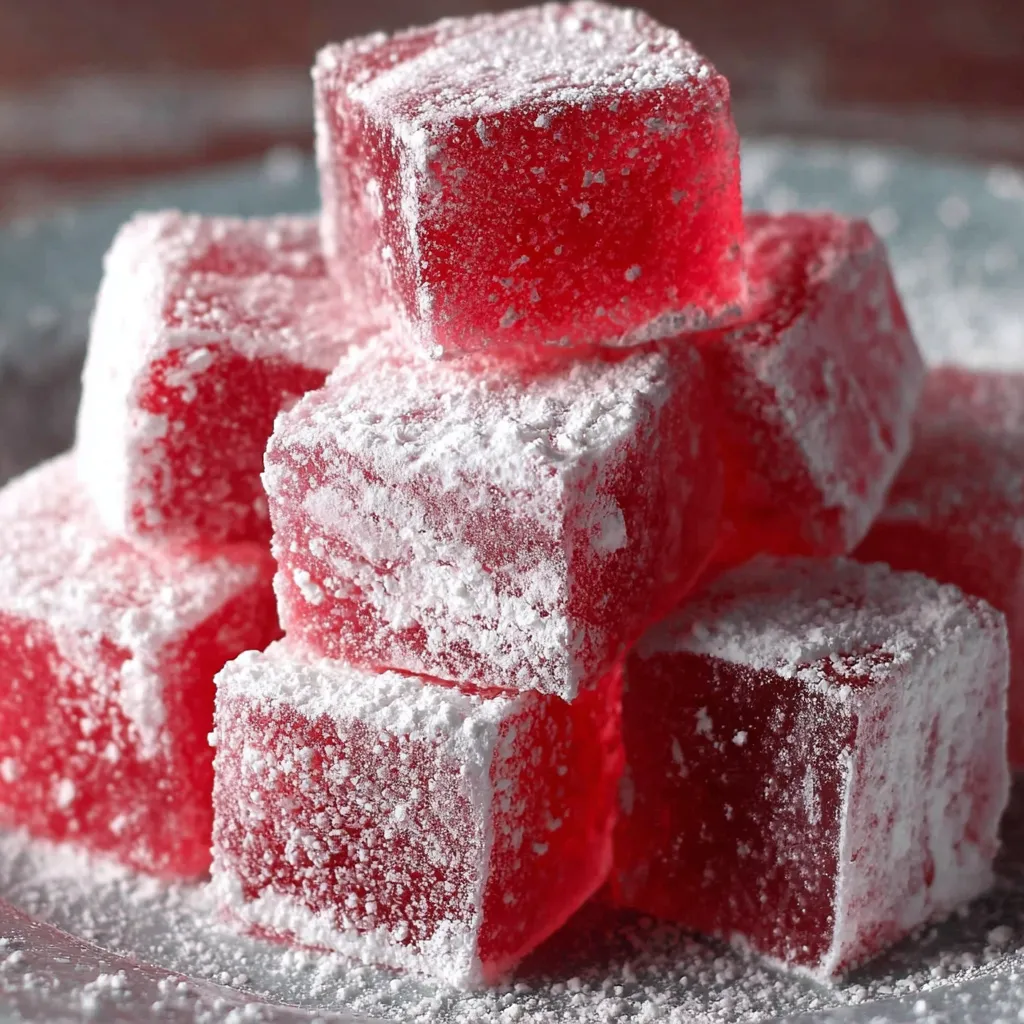
This Turkish delight recipe has been a small celebration in my kitchen for years. I first learned to make lokum during a trip to a Mediterranean food market where the dense, floral cubes were sold by weight and wrapped in paper. Recreating that exact balance of tender chew, bright rose aroma, and gentle sweetness became an obsession until I found a technique that gives reliable results at home. The process rewards patience: it fills the house with caramelized sugar notes and rose perfume while slowly transforming into a glossy, gelatinous slab. Family and friends often arrive suspicious, then leave with pockets full of these cubes and requests for the next batch.
What makes this method special is the way simple pantry ingredients — sugar, water, cornstarch — are coaxed into a soft, pillowy texture without gelatin. The cornstarch acts as both thickener and stabilizer, giving lokum its distinctive melt-in-your-mouth feel, while a whisper of rosewater and a few drops of food color make it unmistakably Turkish. I usually make a double batch at the holidays because these cubes store and gift beautifully. Expect around 40 one-inch pieces from this batch; they’re perfect alongside strong coffee or wrapped in cellophane for neighbors.
Why You'll Love This Recipe
- This version uses only a few pantry staples and easy-to-find aromatics, so you can make it without specialty ingredients in under two days.
- The dish holds well at room temperature for several days and freezes easily — great for making ahead for parties or gifts.
- The texture is tender but not sticky when properly dredged in cornstarch and powdered sugar; results are consistent if you use a candy thermometer and low, steady heat.
- It’s naturally free from dairy and egg products, making it suitable for vegan and vegetarian diets as long as sugar processing is acceptable to you.
- Customization is simple: add chopped pistachios, orange zest, or replace rosewater with orange blossom to vary flavor without changing technique.
- Ideal for gifting — wrap cubes individually or nestle into small tins for an elegant, handmade present.
I remember making my first successful batch on a rainy Sunday; the living room smelled like a floral pastry shop and my partner insisted we taste-test every cube. Neighbors popped by, and by evening half the batch had disappeared. Over time I learned to watch color and texture more than strictly following minutes — the thermometer gets you close, but the final gel stage is a visual and tactile decision. That little ceremony of cutting, dusting, and boxing always brings a smile.
Ingredients
- Sugar (scant 2 cups / 350 g): Use regular granulated white sugar. The recipe depends on clean, white sugar for clarity and consistent crystallization behavior; avoid unrefined or molasses-rich sugars. Brands like C&H or Domino work well.
- Water for syrup (3/4 cup / 175 ml): Plain cold tap or filtered water is fine. Exact volume is important to reach the hard-ball stage without overshooting.
- Citric acid (1/4 teaspoon): A small amount prevents sucrose from re-crystallizing and adds a faint brightness. You can substitute a few drops of lemon juice but the flavor will be slightly different.
- Cornstarch for gel (1/2 cup + 1 tbsp / 70 g) and additional cornstarch: This is the backbone of the texture. Use pure cornstarch (not potato starch) to get the classic chew. I prefer Argo or a store brand.
- Water for slurry (2 cups + 5 tsp / 500 ml): This larger water volume hydrates the starch and forms the gel matrix when heated with the syrup.
- Rosewater (1 1/2 teaspoons): Persian or Turkish rosewater brands give the most authentic floral note — a little goes a long way.
- Red food coloring (10 drops): Optional for the classic pink hue. Use gel food color for a deeper tone with less liquid; natural alternatives like beet powder can be used but may change flavor.
- Cornstarch for cutting (1/4 cup / 30 g): Lightly dusts the top before unmolding and cutting to prevent sticking.
- Cornstarch and powdered sugar for dredging (2/3 cup cornstarch / 80 g and 1/3 cup powdered sugar / 45 g): A 2:1 cornstarch-to-powdered sugar mix keeps the cubes from clinging together and gives a delicate finish.
Instructions
Prepare the syrup: In a heavy-bottomed saucepan combine the sugar, citric acid, and 3/4 cup water. Stir gently over low heat until the sugar dissolves completely. A heavy pan prevents hot spots and reduces the risk of scorching, which can darken flavor and color. Bring to hard-ball stage (250°F / 121°C): Turn heat to high and bring the mixture to a rolling boil without stirring. Use a reliable candy thermometer clipped to the side and cook until the syrup reaches 250°F (hard-ball). This can take 15–30 minutes depending on your stove and humidity; watch closely — sudden foaming or brown edges mean you’re overheating. Make the cornstarch slurry: While syrup heats, whisk 1/2 cup + 1 tbsp cornstarch into 2 cups + 5 tsp cold water in a jar until lump-free. A smooth slurry prevents grainy pockets; shaking the jar for 30–60 seconds helps incorporate the starch fully. Combine syrup and slurry: When syrup reaches 250°F, remove from heat and very gradually whisk in the slurry to avoid lumps. Once combined, return to medium-low heat and whisk constantly. The mixture will thicken and go glossy as starch gelatinizes — this step is the transformation from liquid to gel. Simmer into gel: Maintain a gentle simmer, stirring every 6–7 minutes initially to prevent sticking. Over the next 1–2 hours the mixture will slowly darken to a medium-dark amber and become thick but still pourable. Toward the end, stir every 2 minutes as it nears final consistency; you’re looking for a heavy pudding that holds a ribbon when stirred. Flavor and mold: Remove from heat, stir in 1 1/2 teaspoons rosewater and 10 drops red food coloring until evenly distributed. Lightly oil a 5 x 7-inch container (or line with plastic wrap) and pour the hot mixture in. Smooth the top and let set, uncovered, at room temperature for at least 5 hours — preferably 24 hours in warm or humid climates. Cut and dredge: Sprinkle 1/4 cup cornstarch over the set slab, cut a strip from the edge and gently lift the slab from the mold. Dust with cornstarch again and cut into roughly forty 1-inch cubes. Toss the cubes in a bowl with 2/3 cup cornstarch and 1/3 cup powdered sugar to coat and prevent sticking.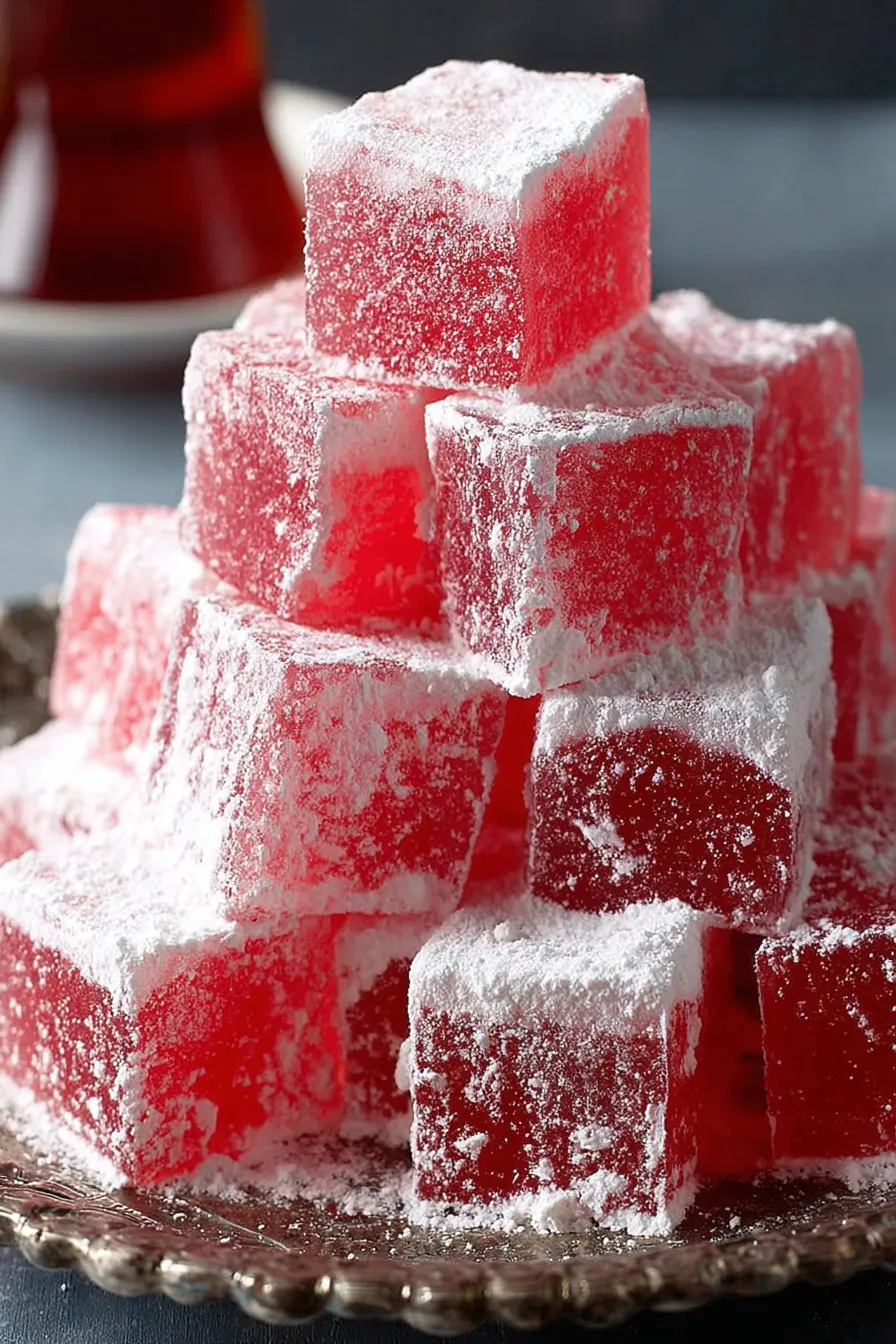
You Must Know
- Keep a close eye on temperature — the hard-ball syrup stage is essential to achieve the correct final texture; use a candy thermometer for accuracy.
- Stirring frequency increases as the gel forms; early on you can stir every several minutes, but toward the end you’ll need to stir every 1–2 minutes to avoid burning.
- The cubes keep at room temperature in an airtight container for up to 7 days and freeze well for up to 3 months when sealed in a freezer bag.
- This batch yields about 40 one-inch pieces and is naturally dairy-free and egg-free; confirm sugar-processing preferences if strict vegan standards are required.
My favorite part is the moment of cutting: the glossy slab gives way to clean, rosy squares dusted in white that look like edible gemstones. Friends often comment on how surprising the texture is — tender rather than rubbery — and how well they pair with bitter coffee. Over the years I’ve adjusted the simmering technique to emphasize patient low heat, which makes the biggest difference between sticky failure and the pillowy result everyone loves.
Storage Tips
Store finished cubes in a shallow, airtight container layered between sheets of parchment to prevent clumping. Keep at cool room temperature away from direct sunlight; refrigeration can dry them out and make them firmer, so avoid the fridge unless your climate is extremely hot. For longer storage, place cubes in a single layer on a tray in the freezer for an hour, then transfer to a sealed freezer bag — they keep up to three months. When reheating frozen lokum, allow them to come to room temperature before dredging again in the cornstarch-sugar mix to refresh the coating.
Ingredient Substitutions
If you don’t have rosewater, orange blossom water or a teaspoon of finely grated orange zest provide a bright, citrus-forward alternative. Agar-agar or gelatin are not recommended as direct substitutes for cornstarch here because they change the texture from chewy to springy; if you must avoid corn, try a tested recipe using arrowroot or tapioca with adjusted ratios. Use powdered beet or hibiscus for natural color but expect slight flavor shifts. For a less sweet version, reduce sugar by 10%, but note that sugar level affects texture and shelf life.
Serving Suggestions
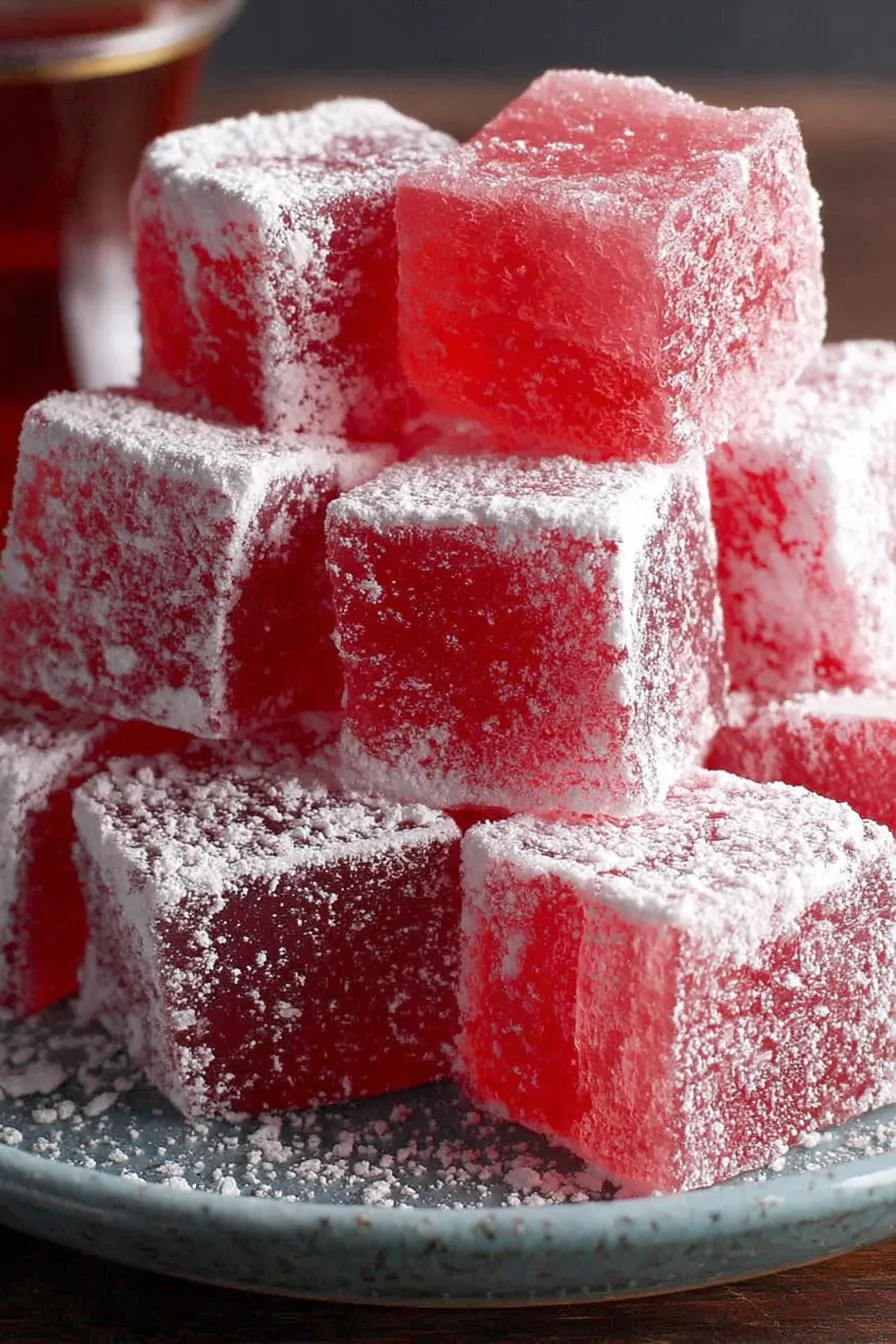
Serve cubes alongside Turkish coffee and a small glass of water for palate cleansing — the astringency of strong coffee contrasts beautifully with the floral sweetness. For a modern twist, sandwich a cube between crisp biscuits like Biscoff for an indulgent bite, or skewer two cubes with a pistachio in the middle for a party pick. Garnish with chopped pistachios, edible rose petals, or a light dusting of extra powdered sugar for a festive presentation during holidays or weddings.
Cultural Background
Lokum, widely known as Turkish delight, traces back to Ottoman Istanbul where flavors like rose, lemon, and mastic were prized. The confection grew in popularity in the 18th and 19th centuries, served as a luxurious sweet at court and later exported across Europe. Regional variations abound — some recipes add chopped nuts like pistachio or hazelnut, while others use different aromatics. Understanding this legacy lends appreciation for the ingredient simplicity; local products highlight floral waters and nuts that reflect regional terroir.
Seasonal Adaptations
In spring, emphasize floral notes with extra rosewater or a few drops of orange blossom. Autumn pairs well with toasted pistachio and cinnamon; stir in 1/4 cup toasted, finely chopped pistachios before pouring into the mold. For winter holidays, swap rosewater for a vanilla-saffron blend or add a tablespoon of pomegranate molasses for a tart counterpoint. Lighten the color and flavor for summer by omitting food color and using delicate citrus zest enhancements.
Success Stories
One holiday season I made three batches for coworkers; by the end of the day people were calling me to ask for a tutorial. A neighbor used this recipe as a first attempt and reported perfect texture by following the thermometer guidance and frequent stirring. At family gatherings, children love the hands-on part of tossing cubes in the cornstarch-sugar mix; it’s a small ritual that turns production into conviviality, and the finished packages make charming, homemade gifts.
Meal Prep Tips
Allocate active time for stirring and thermometer monitoring (about 45 minutes) and passive time for setting (5–24 hours). Make the slurry and measure cornstarch ahead of time to streamline the process. If you’re planning multiple batches, clean the pan promptly after each use — cooled cornstarch residue is harder to remove. Use small disposable boxes or cellophane bags with a twist tie for convenient gifting and portion control.
Making lokum is a slow, satisfying exercise in patience and precision. Once you master the rhythm of simmering and stirring, you’ll find the rewards are well worth the time — a plate of fragrant, rosy cubes ready to share and savor. Try a small test batch first, then scale up as your confidence grows; above all, enjoy the ritual as much as the results.
Pro Tips
Use a reliable candy thermometer and keep the syrup at hard-ball stage (250°F) before adding the starch slurry to ensure proper texture.
Whisk the starch slurry until completely smooth and add it gradually to the hot syrup to avoid lumps.
Stir more frequently as the mixture thickens — toward the end stir every 1–2 minutes to prevent burning and ensure an even gel.
Dust the slab liberally with cornstarch before cutting and re-dust the cut cubes to keep them from sticking together.
Store at room temperature in an airtight container layered with parchment; freeze in a single layer and then pack for longer storage.
This nourishing classic turkish delight (lokum) with rosewater recipe is sure to be a staple in your kitchen. Enjoy every moist, high protein slice — it is perfect for breakfast or as a wholesome snack any time.
Tags
Classic Turkish Delight (Lokum) with Rosewater
This Classic Turkish Delight (Lokum) with Rosewater recipe makes perfectly juicy, tender, and flavorful steak every time! Serve with potatoes and a side salad for an unforgettable dinner in under 30 minutes.
Ingredients
Lokum
Cutting
Dredging
Instructions
Prepare the syrup
Combine sugar, citric acid, and 3/4 cup water in a heavy-bottomed saucepan. Stir over low heat until the sugar dissolves completely to prevent grainy texture.
Cook to hard-ball stage
Increase heat to bring to a rolling boil and clip in a candy thermometer. Cook to 250°F (121°C), which can take 15–30 minutes. Avoid stirring while boiling to reduce crystal formation.
Make cornstarch slurry
Whisk 1/2 cup + 1 tbsp cornstarch into 2 cups + 5 tsp cold water until lump-free. Shake or whisk vigorously to fully hydrate the starch for a smooth gel.
Combine syrup and slurry
Remove syrup from heat and slowly whisk in the cornstarch slurry to avoid lumps. Return to medium-low heat and stir constantly as the starch gelatinizes and thickens the mixture.
Simmer into gel
Maintain a gentle simmer for 1–2 hours, stirring initially every 6–7 minutes and increasing frequency to every 1–2 minutes as it thickens. Cook until medium-dark amber and a gel-like consistency is reached.
Add flavor and mold
Remove from heat, stir in rosewater and food coloring, then pour into a lightly oiled 5 x 7-inch container. Let set at room temperature for at least 5 hours or preferably 24 hours.
Cut and dredge
Dust the surface with 1/4 cup cornstarch, remove the slab, and cut into roughly 40 one-inch cubes. Toss cubes in a mix of 2/3 cup cornstarch and 1/3 cup powdered sugar to prevent sticking.
Serve or store
Serve with strong coffee and water or package in small boxes for gifting. Store cubes in an airtight container at room temperature for up to 7 days or freeze up to 3 months.
Last Step: Please leave a rating and comment letting us know how you liked this recipe! This helps our business to thrive and continue providing free, high-quality recipes for you.
Nutrition
Did You Make This?
Leave a comment & rating below or tag
@delishum on social media!
Categories:
You might also like...
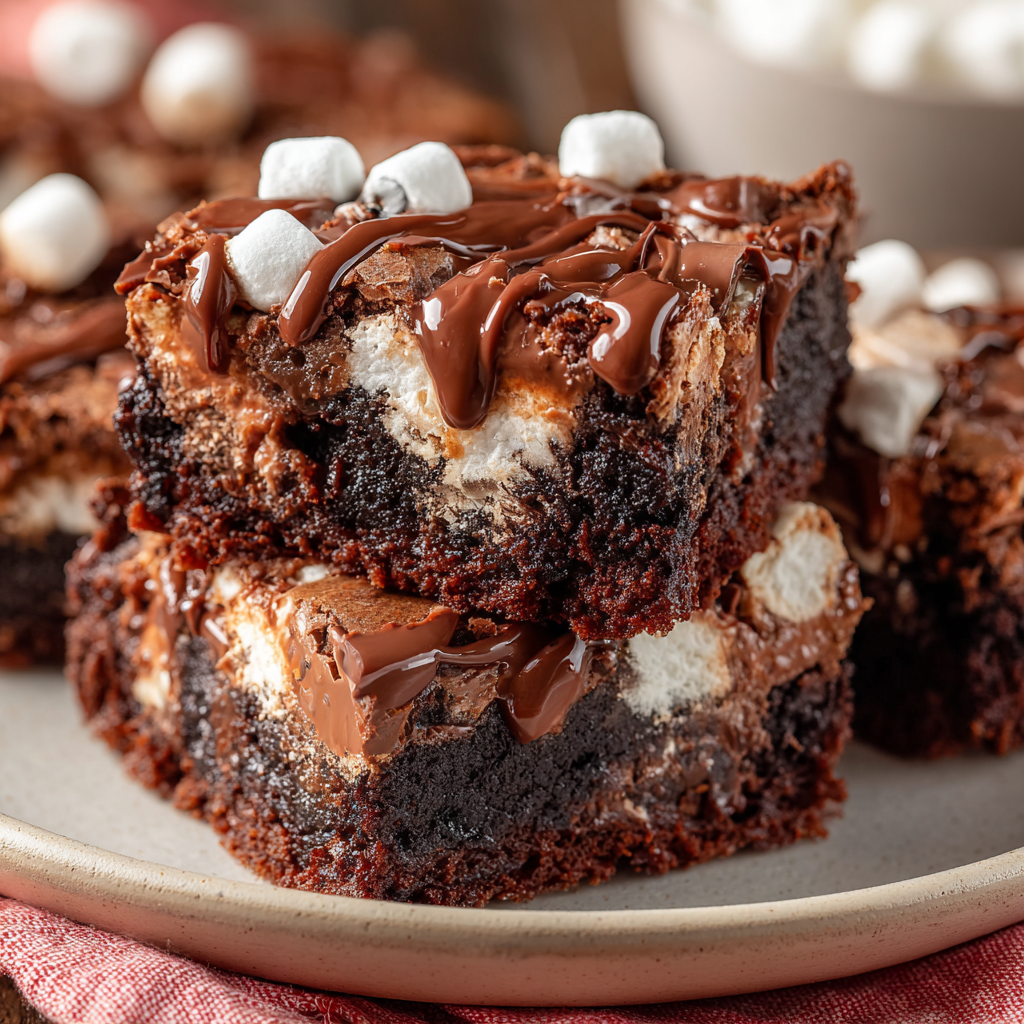
Gooey Marshmallow Chocolate Brownies
Thick chocolate chunk brownies crowned with melted mini marshmallows and drenched in glossy chocolate frosting for the ultimate fudgy, crowd-pleasing bite.
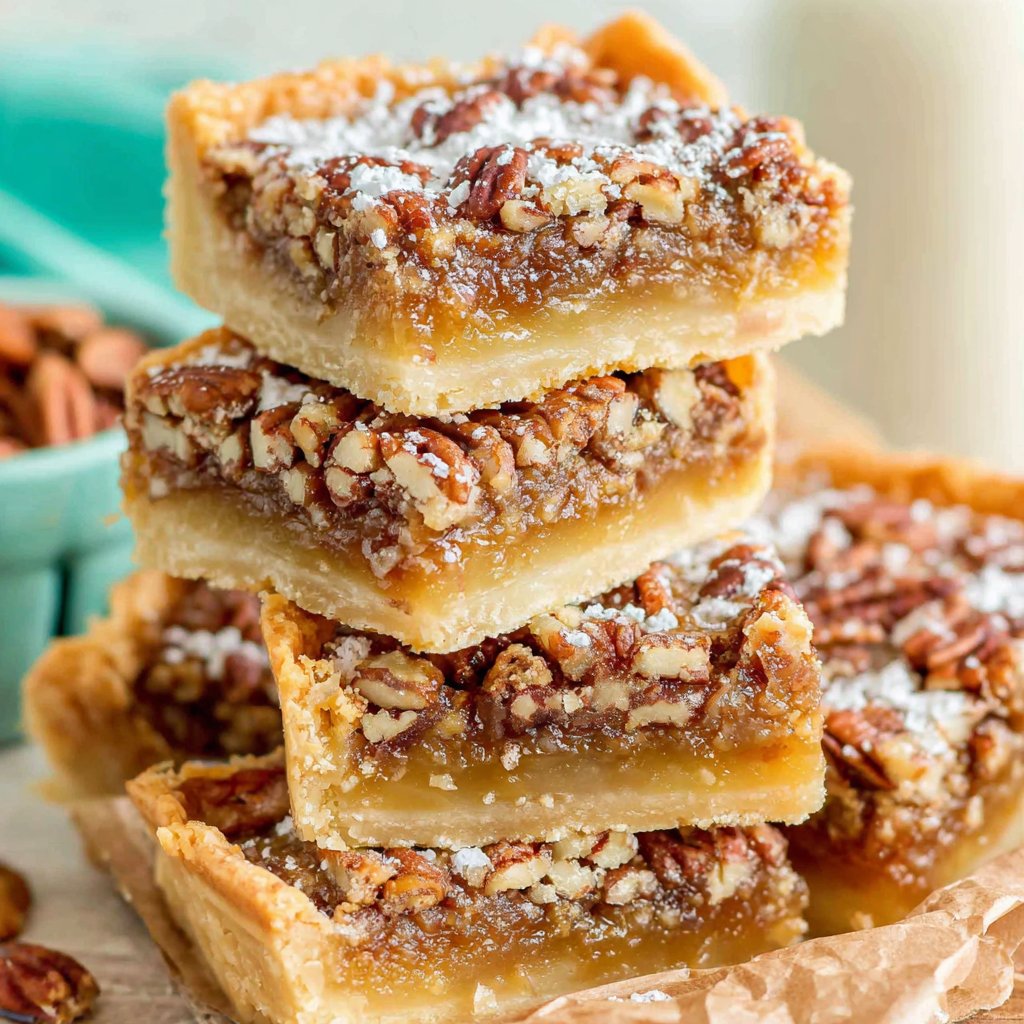
Buttery Pecan Pie Bars
Buttery shortbread crust meets a lush brown sugar pecan topping. Crunchy, caramelly, and ready with just 10 minutes of prep for effortless indulgence.
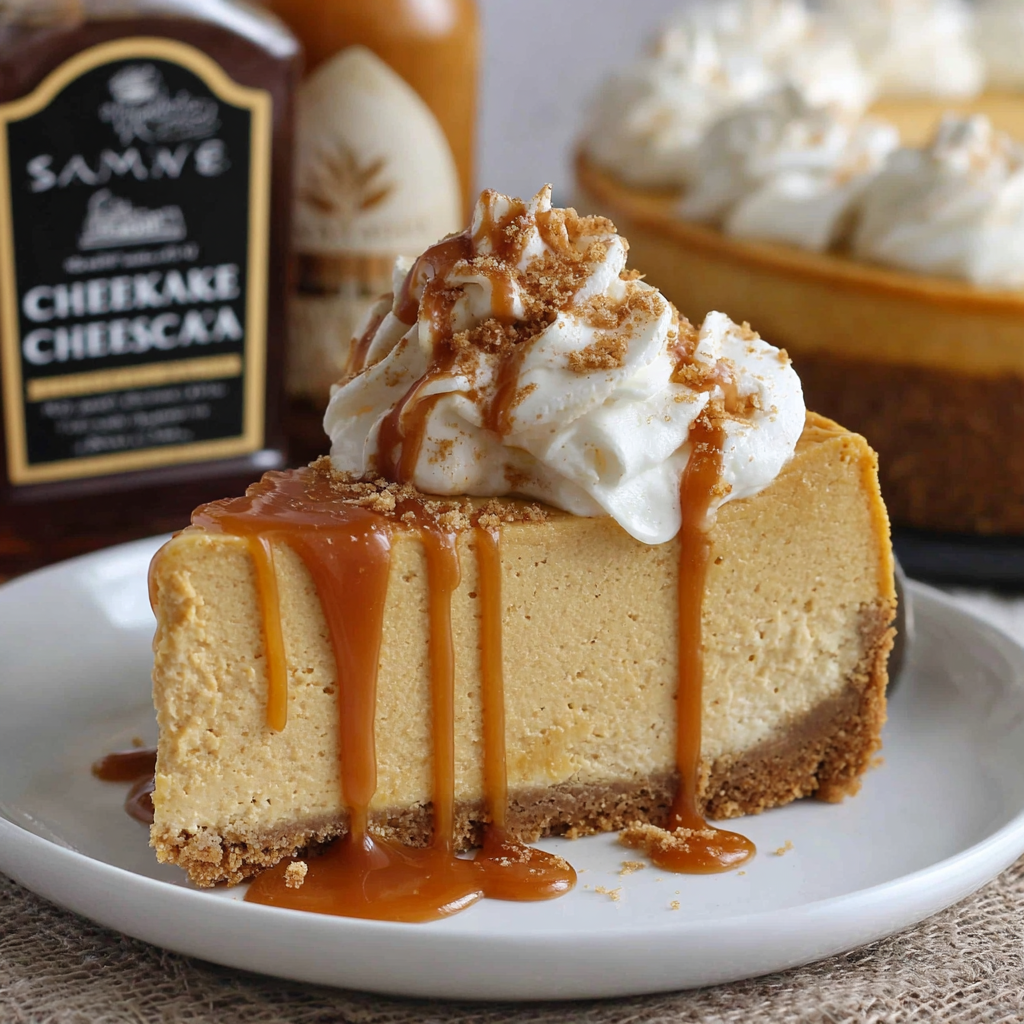
No-Crack Pumpkin Cheesecake
Ultra-smooth pumpkin cheesecake with warm spice and a sturdy graham crust. A showstopper on its own, unforgettable with caramel and rum-kissed whipped cream.
Did You Make This?
Leave a comment & rating below or tag @delishum on social media!
Rate This Recipe
Share This Recipe
Enjoyed this recipe? Share it with friends and family, and don't forget to leave a review!
Comments (1)
This recipe looks amazing! Can't wait to try it.
Comments are stored locally in your browser. Server comments are displayed alongside your local comments.

Hi, I'm Amelia!
What's Popular
30-Minute Meals!
Join to receive our email series which contains a round-up of some of our quick and easy family favorite recipes.